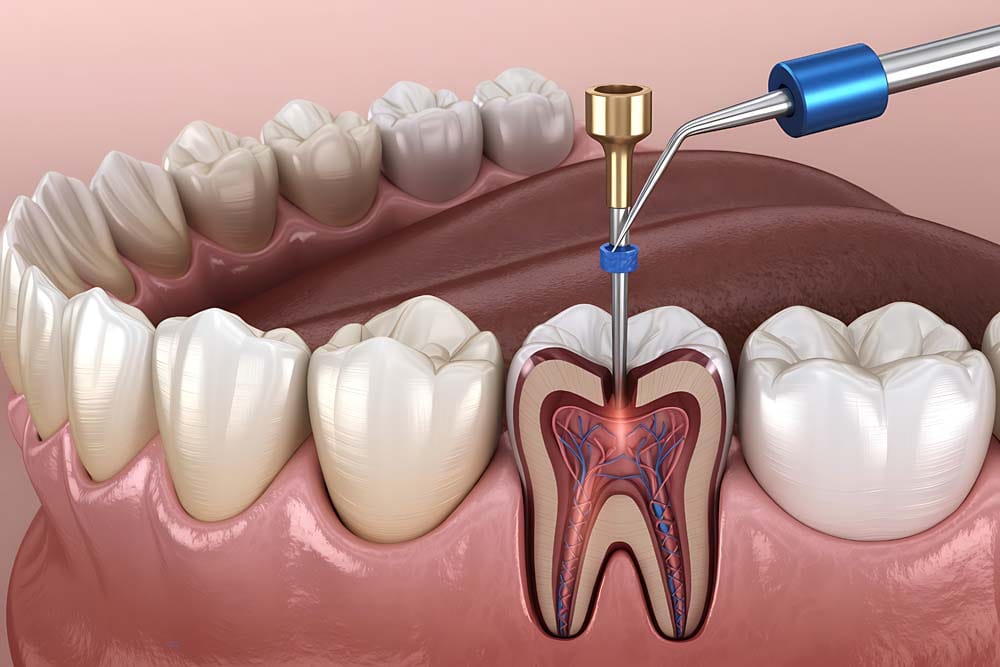
The common causes of tooth damage such as decay, cracks or injury can lead to ingress of bacteria into your tooth. When this happens the tissues in the middle of the tooth (dental pulp) will naturally respond by their self defence mechanism which is inflammation (swelling) resulting in increased pressure within your tooth. Dental pulp is encased within hard walls formed by dentine and enamel, so the increased pressure will inevitably elicit pain. The presence of the inflammation also causes the nerve fibres within the tooth to become more sensitive so a less intense stimulus (such as even chewing on the affected tooth) will provoke pain.
If the tooth is left untreated, the inflammation will eventually cause such extensive damage to the blood vessels and nerves that the dental pulp in the centre of the tooth will eventually die. Your pain may then subside, but the disease within your tooth will be ongoing. Eventually, the by-products of the tissue death will leak through the end of the tooth roots, causing an infection in the bone and gum adjacent to the tooth. This can lead to an abscess. An abscess from a tooth in your lower jaw can sometimes progress to the point where you may experience difficulties in swallowing and breathing and can be life threatening. At this point the tooth will have to be extracted.
The purpose of root canal therapy is to prevent you from experiencing toothache or to alleviate the pain if it has already reached that stage. The treatment is aimed at stopping the inflammation and damage inside the tooth from getting worse, as well as trying to restore the dental tissues back to normal health, so that you can still keep and use the tooth in your mouth.
It is always better to have a discussion with your dentist, sooner rather than later, if you have any worries or concerns about needing root canal treatment. The longer the problem is left, the less likely it is that the tooth can be saved.
Antibiotics will not resolve the inflammation and neither will they target all of the bacteria in and around the tooth, so although you may get some relief from taking them, the problem will persist and you will eventually experience toothache.
Why choose RD Dental for your root canal treatment?
At RD Dental we are fortunate to have two of the most highly qualified clinicians in Leicestershire,Vikesh Mody and Devanshee Mody, to provide root canal treatments and they are both passionate about helping patients retain their own teeth for as long as possible.
What does root canal treatment involve and is it painful?
We will go through the stages of the root canal procedure with you. This will generally involve a cleansing appointment (removing bacteria from inside the damaged tooth and roots using a series of small files and antibacterial solution) and then a filling appointment (using rubber cones to precisely fill and seal the cleaned canals inside the roots). A filling will then be placed on top of these cones and you will be advised by your dentist if a crown or an onlay is needed to protect the whole tooth.
Sometimes root canal treatment can be performed all in one visit and current advances in technology mean that it is normally a comfortable procedure carried out using local anaesthetic, during which many of our patients tend to fall asleep!
Please do not hesitate to contact us at RD Dental if you need any further information. We look forward to welcoming you.
Ritesh and Devanshee Mody
RD Dental